
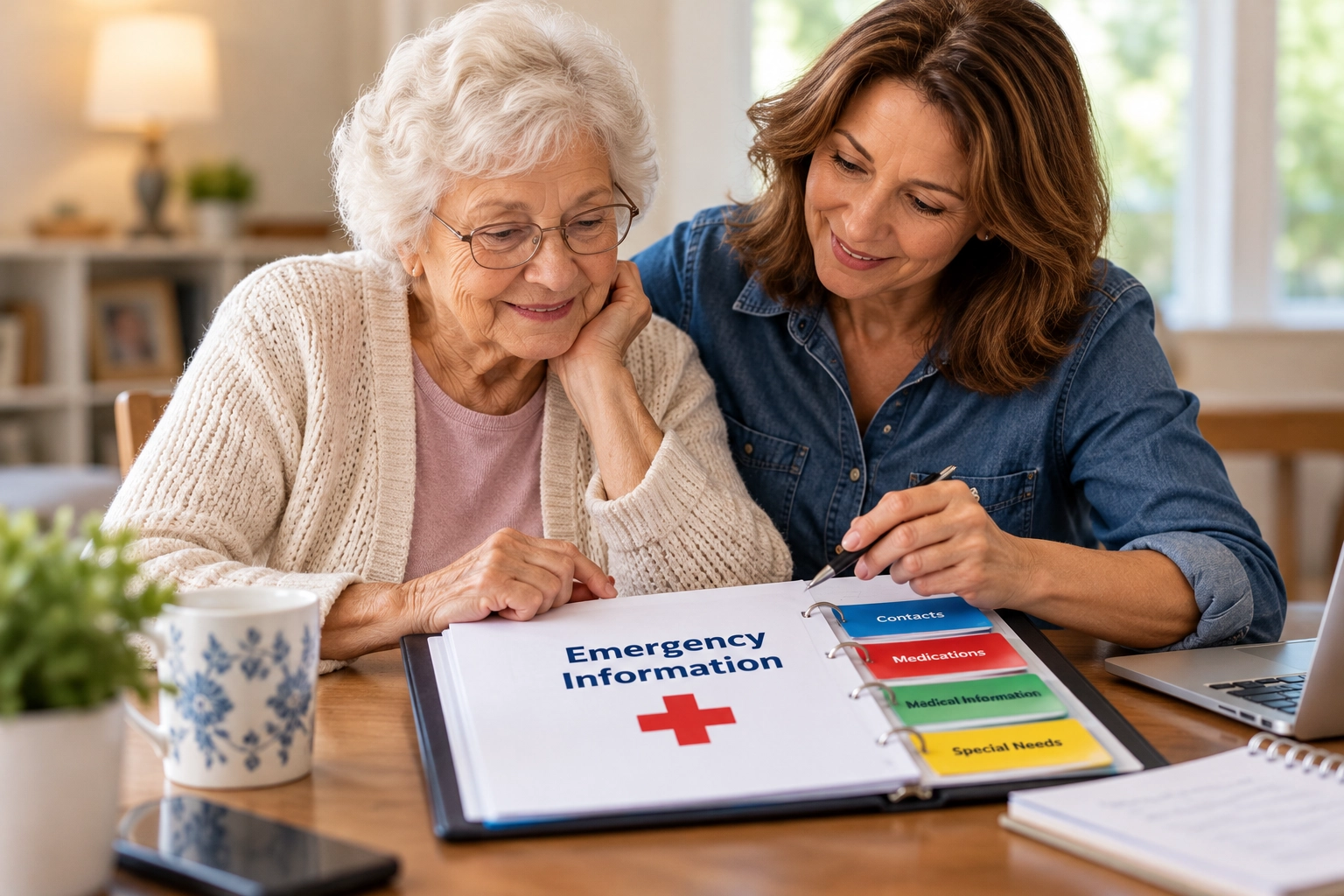
Caring for an Aging Parent? Create an Emergency Information Plan
When you care for an aging parent, being prepared for an emergency can make a difficult situation easier to manage.
If your parent becomes ill, injured, confused, or unable to communicate, would someone know who to contact? Would important information about medications, allergies, medical conditions, or special needs be readily available?
Creating a simple Emergency Information Plan can help make important information easier to find when it is needed.
- Create an Emergency Contact List
Start with the people who should be contacted if your parent has an emergency.
Consider including:
- Primary emergency contact
- Secondary emergency contact
- Family members or caregivers
- Primary care physician
- Important specialists
- Preferred pharmacy
Make sure telephone numbers are current and review them periodically.
- Keep an Updated Medication List
Maintain a current list of medications your parent takes.
Include the medication name and other relevant information that their healthcare provider recommends keeping available.
Update the list whenever medications change.
Don’t forget to include important allergies or known medication reactions.
- Record Important Medical Information
Keep a concise record of important health information that may be useful during an emergency.
This could include:
- Major medical conditions
- Serious allergies
- Important medications
- Pacemaker or other implanted medical device
- Communication difficulties
- Mobility limitations
- Memory or cognitive difficulties
- Other information that may be important in an emergency
The goal isn’t to carry an entire medical history. Focus on information that could help someone understand your parent’s immediate needs.
- Plan for Communication Difficulties
An emergency can be stressful for anyone, but it can be especially challenging for someone who has dementia, memory loss, hearing difficulties, speech difficulties, autism, or another condition that affects communication.
Consider documenting information that may help others communicate with your parent.
For example:
- Preferred name
- Primary language
- Hearing or vision limitations
- Communication assistance needed
- Emergency contact or caregiver
- Important behavioral or safety considerations
- Make Important Information Easy to Find
Having emergency information available at home is important, but emergencies don’t always happen at home.
Your parent could experience a problem while shopping, traveling, attending an appointment, taking a walk, or participating in a community activity.
Consider keeping emergency information in more than one place.
A copy might be kept:
- At home
- With a caregiver
- In a wallet or purse
- With other important emergency documents
A physical Emergency Safety ID can also provide a convenient way to carry essential identification and contact information.
- Don’t Rely Only on a Cell Phone
Cell phones are valuable emergency tools, but they shouldn’t necessarily be the only place important information is stored.
A phone could be locked, have a dead battery, become damaged, or become separated from its owner.
Keeping a physical form of emergency identification provides an additional way for someone to find important information.
- Review the Plan Regularly
An emergency plan isn’t something you should create once and forget.
Information changes.
Set a reminder to periodically review:
- Emergency contacts
- Phone numbers
- Medications
- Allergies
- Medical conditions
- Physicians
- Caregiver information
- Address and other identifying information
You should also review the information after a hospitalization or significant change in your parent’s health or care arrangements.
Make Emergency Preparedness a Family Conversation
Creating an emergency information plan doesn’t have to be complicated.
Sit down with your parent and other family members or caregivers and decide what information should be available and where it should be kept.
Make sure everyone knows where to find it.
A little preparation today can make important information easier to access during an unexpected situation.
Xpress Guardian Can Be Part of Your Emergency Plan
An Xpress Guardian Emergency Safety ID provides a convenient way for your aging parent to carry important identification, emergency contact, and safety information.
For information that you don’t want printed directly on the card, a QR-enabled Xpress Guardian Safety ID can provide access to additional information through the QR code.
An Emergency Safety ID can be carried in a wallet or purse so important information is available away from home as well as during everyday activities.
Prepare today for the unexpected tomorrow.
Xpress Guardian
Emergency Safety IDs
xpress-guardian.com
813-415-9398
This article provides general safety and preparedness information and is not a substitute for professional medical advice. Talk with your healthcare provider about what medical information should be available for your individual circumstances.